The fair-trade check, and why it never says no
Rosterly tells both managers whether a trade is lopsided. It will never stop one going through. Here is why we built it that way.

Trades are the best part of a fantasy league and the most likely thing to end one. Every league has a story about the trade that made someone leave the group chat. The fair-trade check exists to make those stories rarer, without turning the app into a referee.
What it shows
When a trade is proposed, both managers see the same panel: each side's rest-of-season projected points, how the trade changes each team's strongest starting line-up, and a single fairness bar between them.
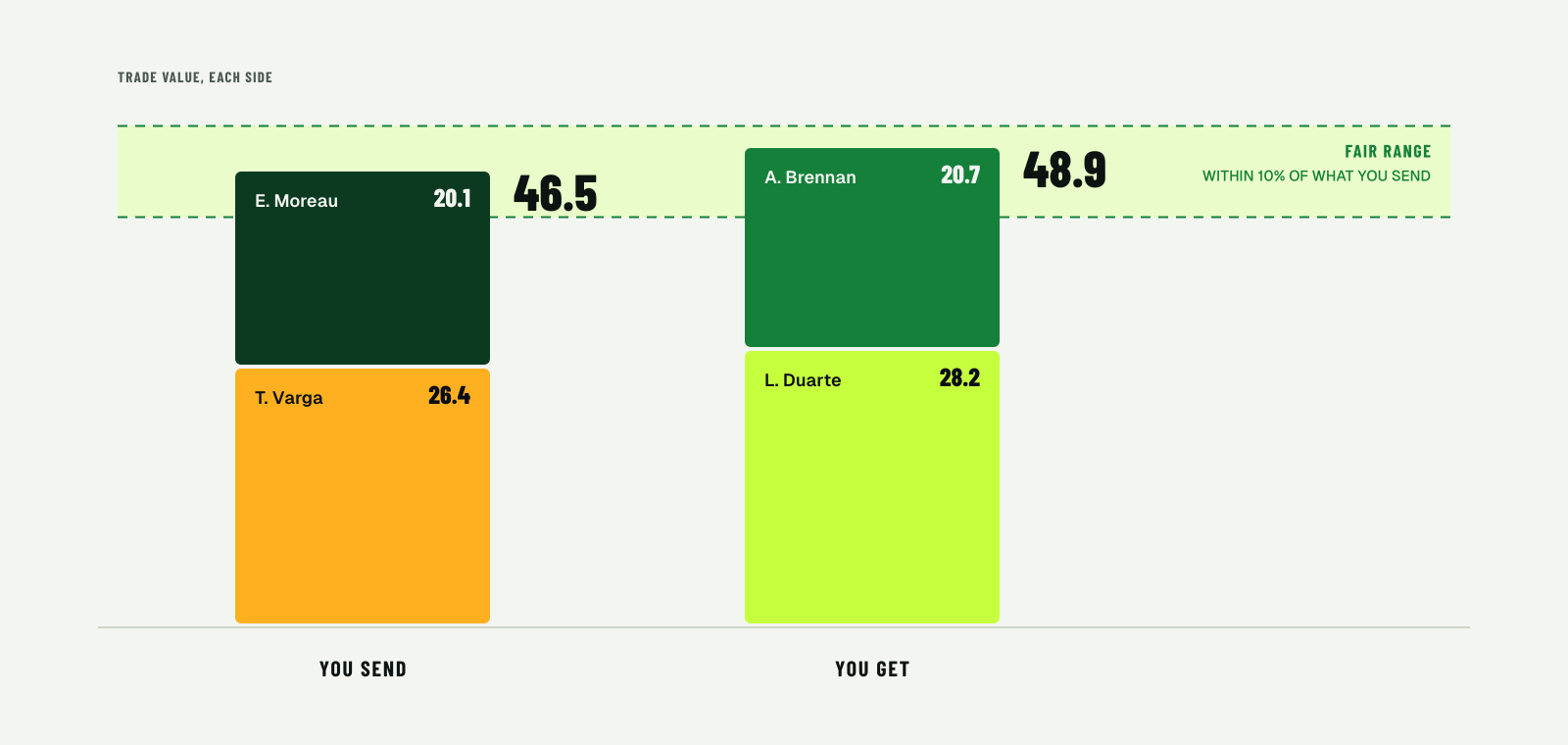
Value is about the line-up, not the player
Two players with identical projections are not worth the same to every team. A striker is worth more to a manager starting a cheap one than to a manager with three good ones on the bench. The check values what the trade does to each starting eleven, which is why a trade can be fair and still be a good idea for both sides.
Why it never says no
Leagues are made of people. Sometimes a lopsided trade is a deliberate rebuild, a dynasty manager playing for next season, or a friend doing a friend a favour the league is fine with. A veto button in the app would decide something the league should decide.
The app gives the league the numbers. The league decides what fair means.
So the check informs, and the commissioner's settings govern: a review period, a league vote, or nothing at all. The leagues page covers which one suits which kind of league.
What we will not do
We will not show a trade's fairness to the rest of the league before it is accepted, and we will not shame anyone in the league feed. A bad trade is punishment enough; it will be on your bench all season.

Written by
Tom Reyes
Product Lead
Tom runs the draft room and live scoring teams, and has lost his own league final three years running.
More posts by Tom Reyes